
What Marmee Can Teach Us About Motherhood
Hello Lovely Readers!
Happy Belated Mother’s Day! This post was meant to come out the friday before mother’s day but real life has gotten unexpectedly crazy. Last month, I really struggled with writer’s block-hence my lack of posts . Thankfully, I think I am getting past my writer’s block and should be posting more regularly so THANK YOU for sticking with this blog. I do post more frequently on my instagram (@ladybookishblog) if you crave short posts.
So today’s post is my favorite thing I have written for the Slow Living Home magazine**. I hope you enjoy it!
**For those of you who are new, in addition to this blog I also am a 2026 writer in residence for the Slow Living Home Magazine. This magazine is “An online magazine & mentoring community of women & homemakers, intentionally holding space for awareness & stability in a rushed and insecure world.” (from the website). I have a lovely column called the Book Nook, where I write book related content based on a monthly theme. For May, the theme was motherhood. With the permission of the lovely Melissa, I am allowed to post my articles here on the blog. Just know there are so many other wonderful articles/columns in this magazine including health, fitness, scripture, recipes, and more! If you are interested in becoming a subscriber (and you definitely should!), here is the link: https://www.patreon.com/cw/slowlivinghomemagazine
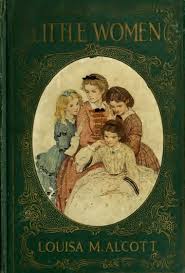
Of all the mothers in literature, I take the greatest inspiration from Marmee of Little Women. I did not have the pleasure of reading Little Women until I was an adult and it has now become my favorite novel of all time. The ‘little women’- Meg, Jo, Amy, and Beth- tend to be the focus for most readers (I myself have always felt a kinship to Meg and Beth). But the more times I read it, the more Marmee captures my heart. As a mother of a toddler, I have often found myself overwhelmed with doubt and fear of being deficient. I know that this is a common feeling but, especially in the early months where some self isolation occurs, it can feel all encompassing and unique to you and you alone. As I continue to revisit Little Women, a growing appreciation for the joys and trials of Marmee root into my heart.
This was especially true when I first had my daughter; my husband was military and had to go on a TDY (temporary deployment) when she was only 5 weeks old. Without family nearby, I struggled in the beginning of how to ‘do it alone’. Thankfully between Marmee, Facetiming my Mom, and the Bible, I got through it just fine. So I wanted to celebrate Marmee and all the mothers out there by looking at 4 lessons we can all learn from this very relatable character (though truth be told, I could write a book on all the things one can take from Little Women). Whether you are a new mom or a seasoned pro, I think characters like Marmee can offer great reminders to store as tools in our motherhood toolbelt.
1.There is room for both work and play
One of the chapters that sticks with me the most is Chapter 11 titled ‘Experiments’. In this chapter, the four girls are on a break from school and their various responsibilities when Amy proposes that they use this time to only play and rest. When Meg asks mother’s (Marmee) permission, Marmee says “You may try your experiment for a week, and see how you like it. I think by Saturday night you will find that all play and no work is as bad as all work and no play” (pg. 130). They enjoyed the week but found themselves ready for the end. Marmee decides to take a day to rest along with their servant Hannah, leaving the girls to do all the work in order to drive home the lesson-it certainly did (I wouldn’t want to spoil this with details, it is better read). Though this lesson is important for the children, it reminds us mothers that we also need this balance. It sometimes feels easier to focus on the chores and responsibilities of the home than to take time for play and rest, but that only leads to burnout and frustration. Marmee puts this lesson best, “Have regular hours for work and play; make each day both useful and pleasant, and prove that you understand the worth of time by employing it well” (pg.140).
2.Be Thankful
From the first chapter, we know the March family is not wealthy. There was a time, it is revealed, when they were financially more stable but that has since passed when the novel begins. Despite their lack of funds, their home is filled with love and joy. The girls desire wealth for different reasons: Meg wishes for it to keep up with her friends, Jo wants it for her family, Amy wants many of the material things that come with money, and Beth wishes for the stability it can bring (though she sweetly is content with their lot most of the time). Marmee uses every opportunity to remind the girls that while money can be nice, it is useful as a tool not as the master of their lives. A great example of this is when Meg has fallen in love with John and Jo is not happy with the idea of losing her sister to marriage. Jo asks Marmee if she wishes for Meg to marry a rich man, Marmee gently explains, “Money is a good and useful thing Jo; and I hope my girls will never feel the need of it too bitterly, nor be tempted by too much…If rank and money come with love and virtue, also, I should accept them gratefully, and enjoy your good fortune; but I know, by experience, how much genuine happiness can be had in a plain little house, where the daily bread is earned, and some privations give sweetness to the few pleasures” (pg 232-233). We see this further contrasted by their neighbors Laurie and Mr. Laurence, who struggle with loneliness and sadness (in the beginning) despite their large wealth. In times where money is tight and our culture tries to impress us with the consumer culture, we can all use a useful reminder that simplicity in life is something to be truly grateful for.
3.Mothers are Flawed too
As I write this, I wonder if I have the audacity to remind others of this; I am daily reminded how flawed I am as a mother (just ask me how my patience levels are doing today). So what I mean by this lesson is that we are flawed and that actually makes us better mothers. Once again, Marmee gives us a great example of this. When Jo is struggling to forgive Amy after Amy, in a jealous rage, burns Jo’s book she has been working on (oh the agony of that chapter!), she goes to Marmee for comfort. Jo laments her passionate anger, which prompts Marmee to reveal a hard truth about herself: she has struggled with anger her whole life! She says “I am angry nearly everyday of my life, Jo; but I have learned not to show it; and I still hope to learn not to feel it”. But Marmee doesn’t stop there; she tells her daughter how she actively works on this flaw, “I’ve learned to check the hasty words that rise to my lips; and when I feel that they mean to break out against my will, I just go away a minute, and give myself a little shake..” (pg.99). This struggle of Marmee’s allowed her to connect with Jo in a way that stays with Jo for the rest of her life. Noticing our own flaws is not just about lamenting them but about showing our children that we all have flaws but we can always work to improve ourselves. But we are only humans and this leads to the book’s most important lesson for mothers…
4.The Importance of Teaching our Children about Christ
In our fallen world and culture that is increasingly hedonistic, authors are encouraged to not write books with important morals that point to Christ. The Enemy would love nothing more than to make our faults and vices things to be celebrated and indulged. This means we, as mothers, must stand strong to follow in the truths the God teaches us in the bible. Marmee, and other literary mothers of a similar ilk, repeatedly show their children, and in turn us, the importance of Christ in our daily life. Famously, this is seen in the first chapter of Little Women- in which the girls lament that “Christmas won’t be Christmas without any presents”. But they soon realize that Christmas is much more than presents, in large part to Marmee. On Christmas day, they each find a book under their pillow which was “that beautiful old story of the best life ever lived, and Jo felt it was a true guide-book for any pilgrim going on the long journey” (pg 25). This simple lesson is a gift that continues to give throughout the girls’ lives as explored in the novel.I have heard many readers complain that Marmee is ‘too preachy’; I would argue she is being a christian mother who takes her ministry seriously. Motherhood (and life in general) is filled with difficulty but the beautiful thing is we were never meant to do it alone; this is the greatest lesson Marmee imparts to her girls in both words and actions. Marmee summarizes this perfectly and so I will leave you with her brilliant words of wisdom, “My child, the troubles and temptations of your life are beginning, and may be many; but you can overcome and outlive them all if you learn to feel the strength and tenderness of your Heavenly Father as you do that of your earthly one. The more you love and trust Him, the nearer you will feel to Him, and the less you will depend on human power and wisdom. His love and care never tire or change, can never be taken from you, but may become the source of life-long peace, happiness, and strength. Believe this heartily, and go to God with all your little cares, and hopes, and sins, and sorrows, as freely and confidingly as you come to your mother” (pg.101).

I hope ya'll enjoyed the post- I certainly loved writing it! I would love to hear from you: who are your favorite mothers from literature? Or your least favorite? Please comment below!
Happy Reading!
Lady Bookish