
American Author Series: Theodor Seuss Geisel (Dr. Seuss)
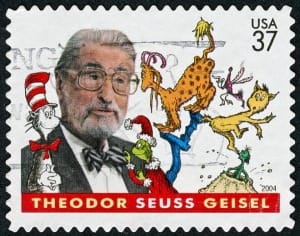
Hello Lovely Readers! I hope all of you are doing well in this constantly changing weather (well at least here on the East Coast). As previously mentioned, this year is the 250th anniversary of the Founding of the United States. I love American history and I’m very excited to celebrate year round. In honor of this birthday, I am starting a new set of posts called the American Author Series, where I will explore the lives and works of famous American authors. Besides my love of books, I also have a great love of theatre; I just finished choreographing a production of Seussical, so I thought I would start with the beloved Dr. Seuss. Most American children grew up reading some or all of his books. They filled school libraries and were read by teachers, parents, librarians, and students alike! I even remember celebrating his birthday in school as it was also the chosen date for Read Across America day. Here is a short profile on the late Dr. Seuss!
Early Life
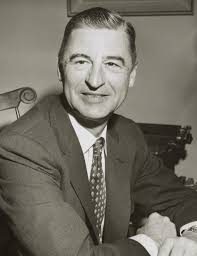
Theodor Seuss Geisel was born on March 2, 1904 in Springfield, Massachusetts. He was born to German immigrants. His father was a brewmaster who became unemployed during Prohibition times ; he eventually got a job supervising the Springfield Parks, which included a zoo that Seuss loved to go to in order to draw animals. Seuss credits his mother, who chanted silly rhymes at bedtime, for inspiring his children’s writings. He attended Dartmouth University and he adopted the pen name Seuss in order to work on Dartmouth’s humour magazine The Jack-O-Lantern. After graduating in 1925, Seuss attended Oxford in order to appease his father’s desire for him to be a college professor. Classmate, and future wife, Helen Palmer convinced him to focus on his writing and illustrations, and so he dropped out in 1927. Just think, without this woman we may never have had all the wonderful Seuss books! Back in the states he began contributing to various magazines like Life and Vanity when he was given the opportunity to illustrate a children’s book of sayings called Boners; he later said this was one of his big breaks into the industry.
Works
After illustrating humor books, he decided to write and illustrate a children’s book. The resulting work, And to Think I Saw it On Mulberry Street, was rejected 27 times before being published in 1937. He published under the name Dr. Seuss as a joke to his uncompleted Doctorate in Philosophy. He tried to break into the adult novels but was not well received so he continued to write children’s books. After working as a political cartoonist in World War II, he continued his previous career. Over his lifetime, he would publish over 60 books which would be translated into 45 languages and sold many millions of copies. His work has continued to thrive even after his death in 1991 and has spurred film, television,and musical adaptations. His works (and their various adaptations) have won many awards including Emmys, an Oscar, a Peabody award, a Pulitzer prize, Caldecott honors, and a Laura Ingalls Wilder Award.
For a completed list of his works, you can check this page out: https://www.crushingkrisis.com/2016/11/from-the-beginning-the-complete-dr-seuss-bibliography/
Controversy
In 2021, the business who manages Dr. Seuss’ books (Dr. Seuss Enterprise) announced they would no longer be publishing six of his works due to offensive/racial stereotypes. These books are And to Think That I Saw It on Mulberry Street, If I Ran the Zoo, McElligot’s Pool, On Beyond Zebra!, Scrambled Eggs Super!, and The Cat’s Quizzer. Most notably, If I Ran a Zoo is said to perpetuate caricatures of Africans and That I Saw it on Mulberry Street perpetuates Asian stereotypes. I do remember hearing these criticisms when this announcement was made though you can still find these books in libraries and used bookstores. Dr. Seuss is not the only author to be criticized for harmful portrayals in books but he is one of the most visible, since his books have been such a large part of early childhood reading. One thing to note, is that his later works such as Horton Hears a Who!, The Lorax, and The Sneetches do contain positive messages of inclusion and anit-discrimination. Fun Fact: Horton Hears a Who is actually dedicated to his Japanese friend and he later made changes to previous books to show his own personal evolution of thoughts and ideas. I will talk in another post about my deeper thoughts on discontinuing books due certain portrayals of people, but I do believe there is an interesting discussion to be had about ‘canceling’ books and looking at them as a teaching opportunity to teach about historical context and how culture has changed. But what do you think? I would love to hear your thoughts!
I apologize if this post seems brief. I would love to ramble even more about Dr. Seuss but my busy theatre schedule has made me finish this post later than I anticipated so I had to cut it short. But I do hope you enjoyed learning more about him.
I would love to know what American authors YOU would like to see future posts on. PLEASE comment below your thoughts.
Happy Reading!
Lady Bookish
P.S. Don’t forget to check us out on instagram (@ladybookishblog), look at our Facebook Page (Lady Bookish), and/or email me at ladybookishblog@gmail.com .
https://www.britannica.com/biography/Dr-Seuss
https://drseussfoundation.org/#
https://geiselmed.dartmouth.edu/about/geisels/
https://blogs.thesteppingstonesgroup.com/celebrating-dr.-seuss